
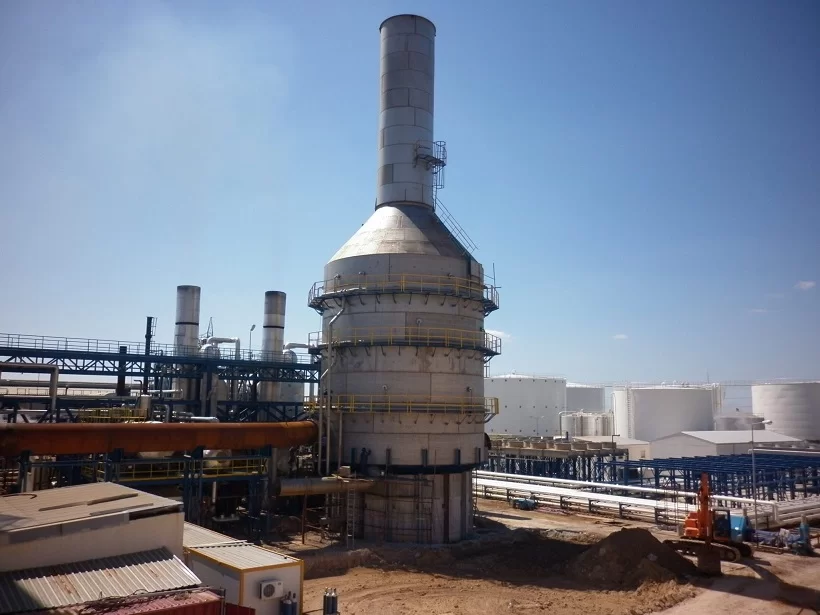
Corrosion Dynamics in FGD Systems
Flue Gas Desulfurization (FGD) units present one of the most corrosive environments in heavy industry. As sulfur dioxide is scrubbed from exhaust gases, the process often drops below the acid dew point, resulting in the condensation of high-concentration sulfuric acid. Traditional metallic bellows and standard rubber seals suffer from rapid pitting and degradation in these zones. BundleTec addresses this critical vulnerability by manufacturing non-metallic expansion joints specifically engineered for the aggressive chemistry of scrubber ducts.
PTFE and FKM: The Ultimate Chemical Barriers
To combat these aggressive chemical attacks, BundleTec designs fabric expansion joints using 100% cross-film PTFE and premium FKM (Fluoroelastomer) / EPDM elastomers. PTFE offers unparalleled chemical resistance, remaining inert to almost all industrial chemicals within a temperature range of -400°F to 600°F. When combined with the mechanical flexibility of FKM, these composite belts provide a zero-leakage barrier against acidic condensates, reflecting the elite performance specifications of BundleTec and BundleTec.
Structural Integrity Under Pressure
Beyond chemical resistance, FGD expansion joints must withstand significant pressure fluctuations and abrasive particulate loads. BundleTec incorporates high-tensile fiberglass and aramid reinforcement fabrics into the elastomer matrix. This robust construction prevents ballooning under positive pressure and resists collapse under vacuum conditions, ensuring long-term reliability and uninterrupted operation in critical emission control systems.