
Industrial Fabric Expansion Joints: Principles & Design
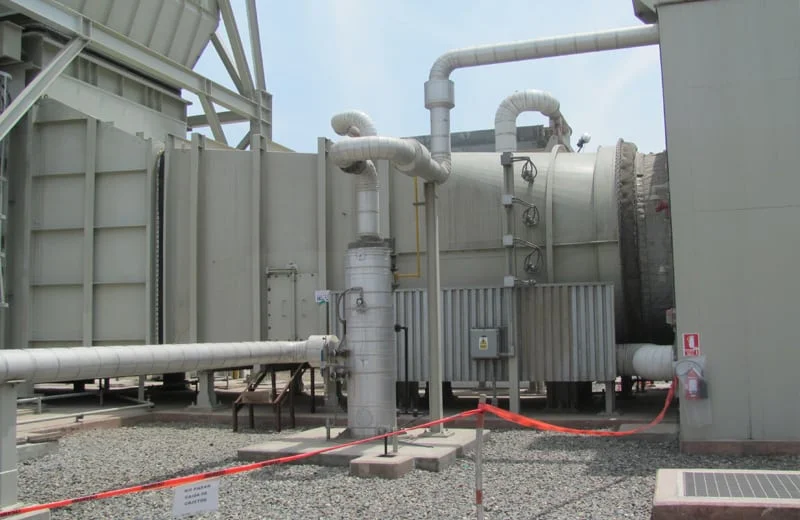
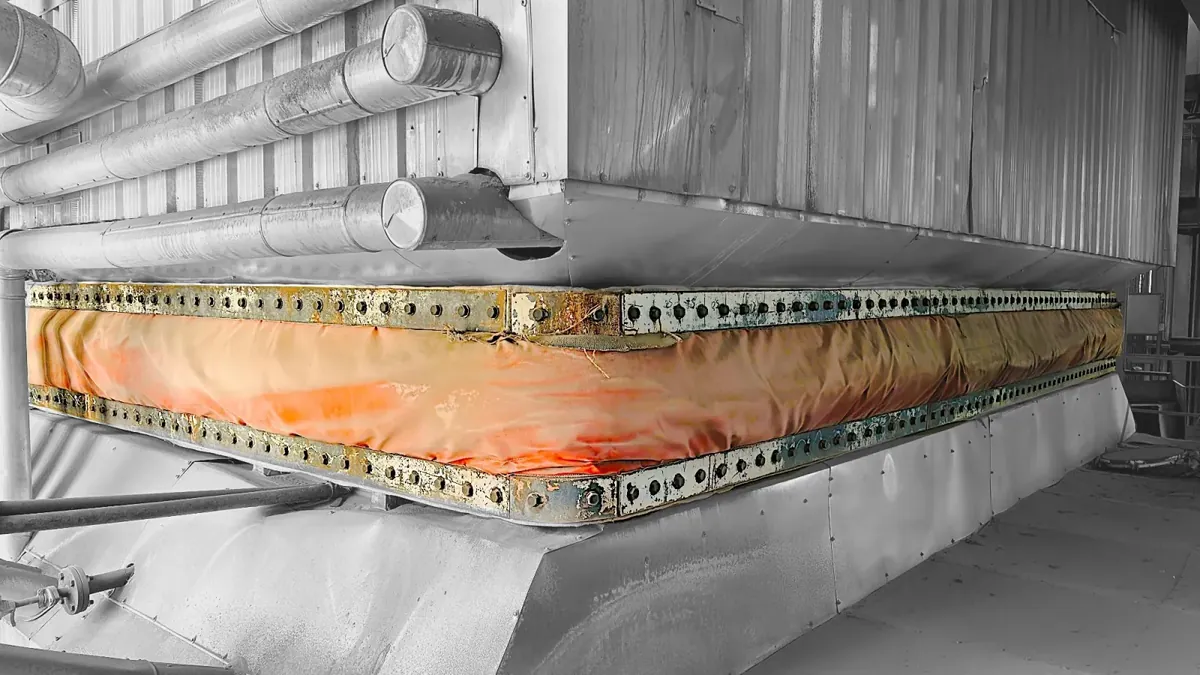
Industrial plants face hot gas, pipe shaking, and duct movement. Fabric expansion joints protect your duct systems from these stresses. Unlike stiff metal pipes, flexible fabric joints absorb thermal growth in all directions. They move smoothly in axial, lateral, and angular paths within a short length.
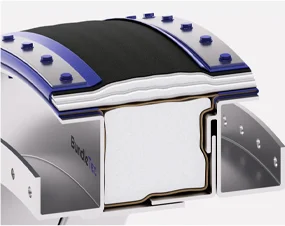
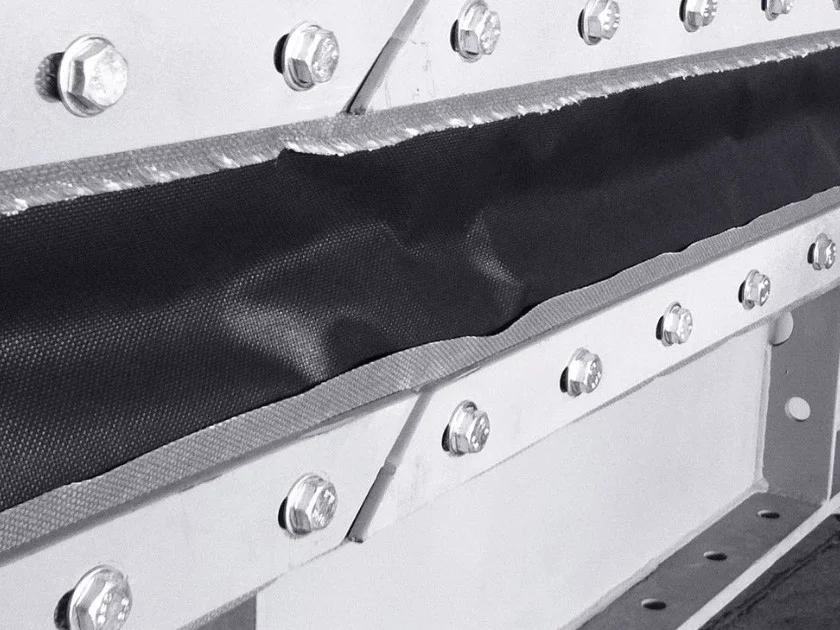
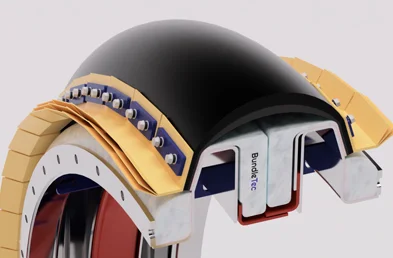
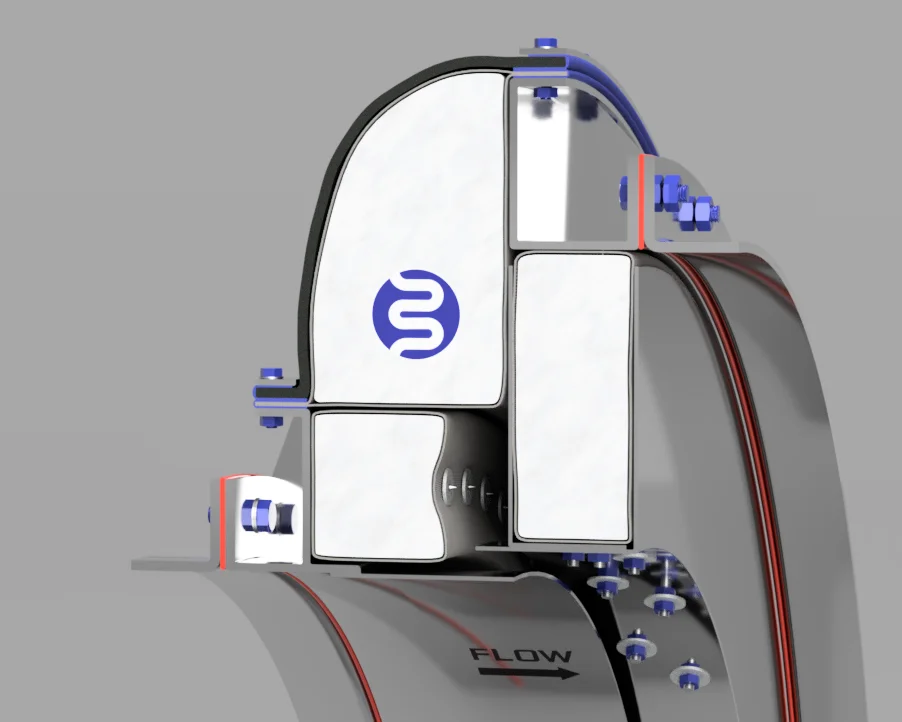
BundleTec builds multi-layer fabric joints for power plants, cement kilns, and chemical plants. Each joint uses four main protective layers:
Outer Cover
Resists rain, wind, sun, and outdoor wear. Keeps inner layers dry and strong.
Gas Seal Barrier
Stops gas leaks with zero-pore PTFE film. Keeps acid drops inside the duct.
Thermal Insulation
Silica and ceramic blankets cool 1000°C gases to protect the outer belt.
Inner Steel Baffles
Guides gas flow smoothly. Shields soft fabrics from sharp ash and fast dust.

Industrial Application Guides & Plant Insights
Learn how to solve heat, acid, dust, and vibration problems across industrial duct systems.
Gas Turbine Exhaust & Thermal Shock Engineering (GtTec™ Series)
Peaking and combined-cycle gas turbines experience rapid exhaust ramps of 50–80°C/min. Conventional E-glass belts delaminate under transient gradients reaching +1000°C (+1050°C peak).
- Inconel 625 (2.4856) Reinforcement: Knitted alloy wire mesh resists acoustic buffeting and high-velocity flutter up to 65 m/s.
- 1200°C CMS-Bio Bolster: Graduated bio-soluble insulation protects the PTFE membrane (<260°C) and keeps outer skin <60°C (ISO 13732-1).
- Aerodynamic Flow Liners: Telescopic alloy baffles shield internal bolster plies from turbulent exhaust shear.
FGD Scrubbers & Acid Dew Point Protection (ChemTec™ Series)
Flue gas desulfurization ducts operate across sulfuric and hydrochloric acid dew point zones below 150°C. Condensing acid mist rapidly degrades standard elastomers and unprotected metallic bellows.
- Cross-Laminated Virgin PTFE: Zero-porosity sintered barrier resists pH 0–14 condensate up to +260°C continuous.
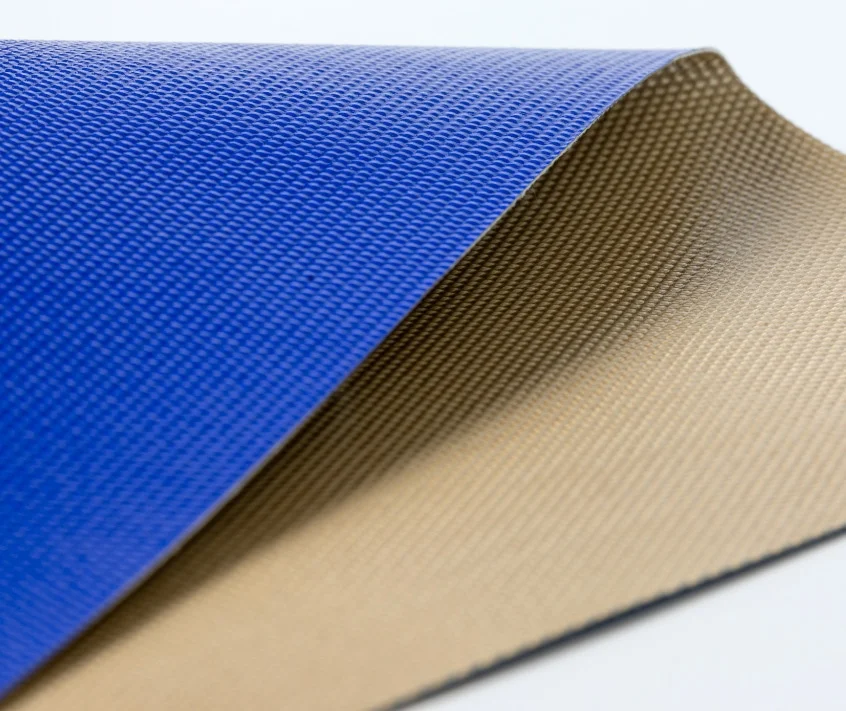
- FSA-DSJ-401 FKM Outer Jacket: Terpolymer fluoroelastomer shields structural fabric layers against acid vapor and hydrocarbons.
- Verified Tightness: Tested to RAL-GZ 719 (EN 1593 Nekal® ≥50 hPa) with optional factory helium QA (Q ≤ 1.0×10⁻³ mbar·l/(s·m)).
Abrasive Clinker & Fly-Ash Ducts (ArminTec™ & FlueTec™)
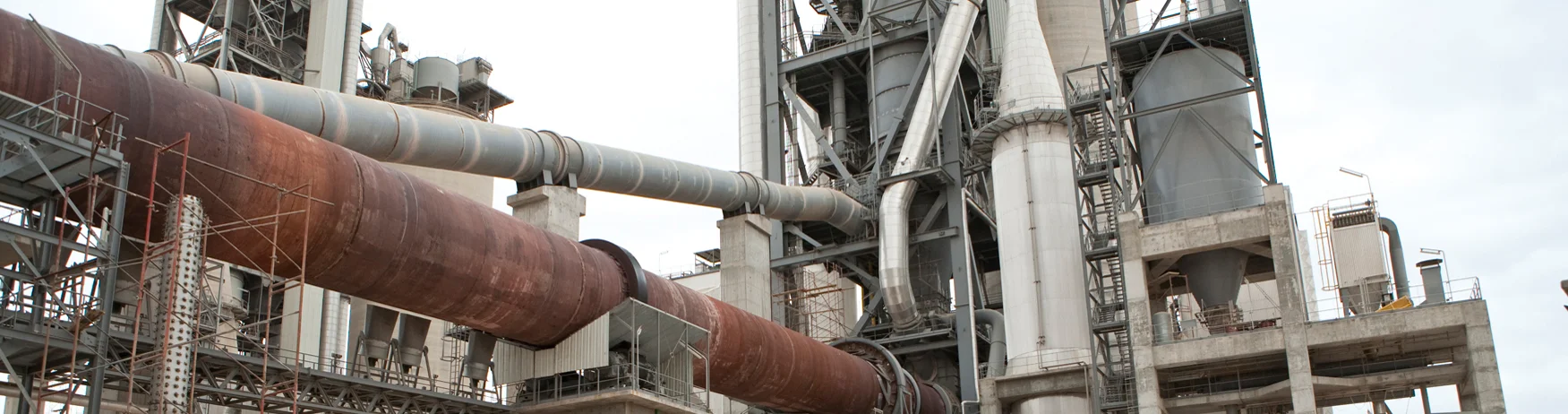
Cement preheater cyclones, clinker coolers, and coal boilers carry high-velocity abrasive particulates. Unprotected fabric cavities pack with hardened dust and tear during thermal contraction.
- Temperature-Graded Deflectors: Hardox 400/500 liners for ≤250°C and AISI 304 / EN 1.4828 / AISI 310S (1.4845) for 250–550°C.
- Particulate Barriers (SAPB/DAPB): Resilient ceramic-packed pillows seal the cavity gap against fly-ash infiltration.
- Unrestricted Kinematics: Prevents dust bridging so ducts absorb full axial compression and lateral shear smoothly.
ID/FD Fan Suction & Vibration Isolation (FanTec™ Series)
High-capacity centrifugal fans generate continuous mechanical vibration and ±150 mbar pressure pulsations. Rigid duct connections transmit cyclic fatigue loads directly into fan bearings and weld seams.
- 95% Vibration Isolation: Flexible silicone (≤240°C cont.) or EPDM (≤135°C) coated E-glass decouples fan casings from ductwork.
- Negligible Belt Spring Rate: Minimizes thermal reaction forces on sensitive rotating equipment nozzles.
- Anti-Flutter Sleeves: Internal flow guides stabilize belt profiles under negative suction and turbulent discharge up to 30 m/s.
Predictive Inspection & Field Reliability Protocol
Field audits confirm that most premature fabric failures originate from clamping errors or unmonitored bolster shifting. Structured preventive inspections extend service life across 5–8+ operating years.
- Quarterly IR Thermography: Detect outer-skin hot spots (>60°C) signaling internal bolster displacement before belt burnout.
- Outer Jacket Inspection: Check seams, corners, and splash zones for chemical blistering, mechanical abrasion, or UV aging.
- Calibrated Torque Verification: Tighten bolts in 3 cross-star passes (30%→60%→100%) and perform a 24-hour hot retorque.
- Internal Liner Clearance Audit: Verify flow-sleeve overlap, cavity cleanliness, and drain port integrity during scheduled outages.
Engineering Comparisons & RFQ Specification Guides
Evaluate cost drivers, lead times, and expansion joint technologies before issuing your next industrial RFQ.
Fabric Expansion Joint Pricing & RFQ Guide →
Review the 7 core cost drivers, belt vs. framed lead times, and our 12-point EPC specification checklist.
Fabric vs. Metal Expansion Joints Compared →
Compare belt spring stiffness, pressure thrust, chloride SCC resistance, and lifecycle ROI.
Fabric vs. Rubber Expansion Joints Guide →
Clarify thermal limits, pressure envelopes, and duct geometry trade-offs between fabric and rubber.
Frequently Asked Questions
Clear answers to common questions about fabric expansion joint design, limits, and care.