
Gas Turbine Exhausts: Absorption of Split-Second Shockwaves
In modern combined cycle power plants (CCPP), gas turbines cycle on and off at incredible speeds to meet peak load demands. This leads to Thermal Shocks reaching from ambient temperatures to hundreds of degrees, even exceeding 1000°C within seconds. Traditional fabrics turn to ash under this shock; steel warps.
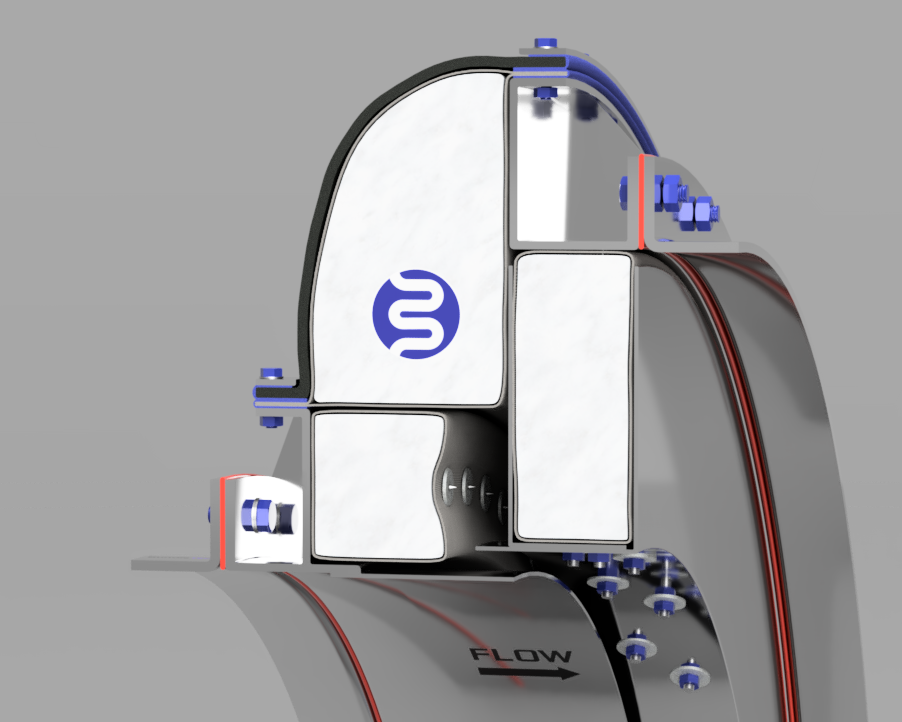
To prevent this, a special layer anatomy comes into play, woven with stainless steel wire meshes and Inconel wires, overlaid with silica and fiberglass bolsters.
BundleTec GT-Series Engineering
- Damping Capacity: Ceramic blankets that block kinetic heat at the first layer during a potential turbine discharge.
- Flame Reflectors: Titanium-alloyed flexible reflective plates (Baffles).
- Aerodynamic Stabilization: Hybrid armor geometry that reduces the flutter (vibrational tearing) effect to zero at high gas flow velocities (40+ m/s).
Custom Manufacturing and On-Site Application Technology
Due to space constraints in turbine exhausts, fabric expansion joint splicing operations are typically performed on scaffolding. Thanks to the portable splicing techniques we offer at the customer site, maintenance times are cut in half. This is the technology capable of withstanding split-second shocks for years.