
Evaluating Elastomeric Performance Limits
Selecting the correct elastomer for non-metallic expansion joints is critical for operational safety and longevity. EPDM and FKM (Fluoroelastomer) are industry staples, each offering distinct advantages. EPDM provides excellent resistance to ozone, weathering, and mild alkaline solutions, making it ideal for standard HVAC and low-temp industrial applications. However, FKM is required when dealing with aliphatic and aromatic hydrocarbons, offering superior heat resistance up to 400°F. BundleTec meticulously analyzes process media to specify the exact elastomeric compound required.
The Superiority of PTFE in Extreme Conditions
When operational parameters exceed the capabilities of standard elastomers, Polytetrafluoroethylene (PTFE) becomes the material of choice. Boasting an exceptional temperature range from -400°F to 600°F (-240°C to 315°C), PTFE provides absolute chemical inertness. BundleTec utilizes multi-directional expanded PTFE and cross-film laminates to prevent the micro-porosity issues common in standard skived PTFE. This ensures a true zero-leakage gas barrier even in the presence of highly concentrated acids and volatile organic compounds.
Composite Integration for Optimal Flexibility
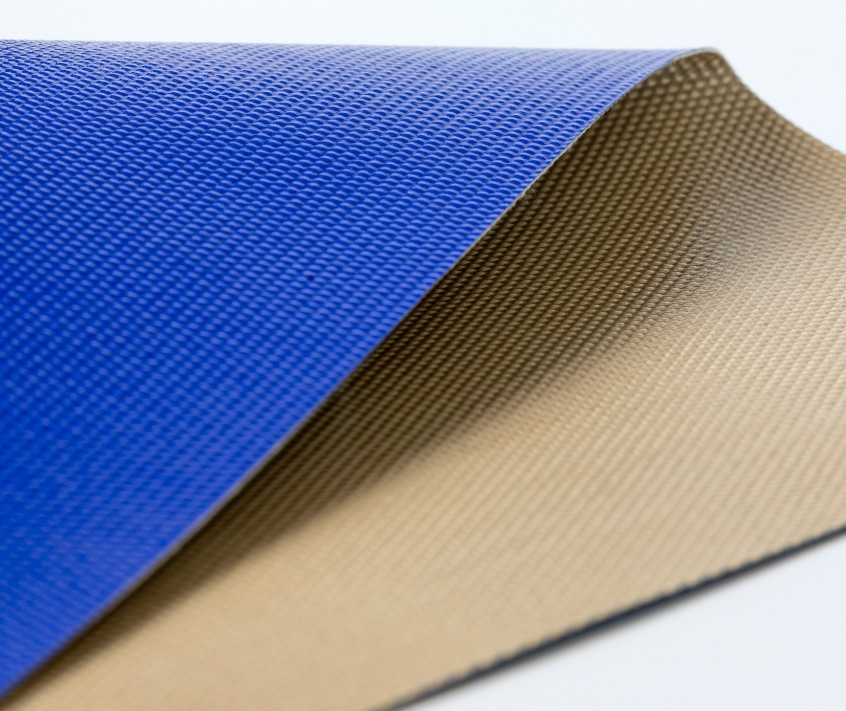
BundleTec engineers do not rely on a single material; rather, they construct composite belts that leverage the strengths of multiple polymers. A typical high-performance joint may feature a PTFE internal gas seal, fiberglass thermal insulation, and an FKM outer cover for environmental protection. This layered architecture, mirroring the specifications of top American manufacturers, guarantees that the expansion joint can withstand both internal chemical attack and external mechanical wear.